Showing posts with label Lady from Shanghai. Show all posts

Wednesday, May 27, 2020

Similarities and Differences between Orson Welles's 'The Lady From Shanghai' and Ridley Scott's 'Blade Runner'

Similarities and Differences between Orson Welles's 'The Lady From Shanghai' and Ridley Scott's 'Blade Runner'


Similarities: Both scenes are quite romantic and share a first kiss between the female and male lead; Elsa and Deckard are both the ones to initiate the kiss but their styles differ - Elsa comes across as seductive which fits the femme fatale role whilst Deckard appears more abusive; both films have this theme of an identity struggle with the female leads - are both pretending to be someone else: Rachael is pretending to be a human, Elsa is pretending to be someone else until it's discovered that she's the one who is the murderer

Differences: Blade Runner is shot on a set whilst Lady from Shanghai was set outside in the open; LFS uses film noir whilst BR uses neo-noir; LFS uses high contrast and lowkey lighting whilst BR uses lowkey lighting - neo-noir visual style; BR uses two shots in dialogue whilst LFS uses shot-reverse-shots used in dialogue; BR was shot during the Blockbuster Era whilst LFS was shot during the Hollywood Era; the kiss between Elsa and Michael is more built-up making it appear more intimate whilst the kiss between Deckard and Rachel isn't and the scene is more fast-paced and moves on quickly with the plot indicating that their kiss isn't as important. Deckard's forcefulness and what could be considered Rachael being submissive indicates the type of relationship they have. These differences could be due to their differences in backgrounds; OW worked in the theatre as a director and RS in advertising where he learnt his cinematographic, lighting and editing techniques.

Thursday, September 27, 2018

Hollywood in the Studio Era:
Explain what is meant by this term and name main studios 

The term 'studio system' was commonly used during a period of time known as the 'Golden Age of Hollywood'.It refers to a method of film production and distribution owned by a small number of 'major' studios in Hollywood although it is still commonly used today as a reference to the systems and output of the major studios. The term dates back to the practice of large motion picture studios between the 1920s and 1960s.
Five large companies, 20th Century FoxRKO PicturesParamount PicturesWarner Bros., and Metro-Goldwyn-Mayer came to be known as the Big Five trade publications and their management structures and practices collectively came to be known as the "studio system."

The ranking of the big five (in terms of the profit being made) was largely consistent during the Golden Age. MGM was number one for eleven years (1931-41), Paramount, the most successful sound studio within 1928-30 faded for the better part of the subsequent decade, and Fox was number two for most of MGM's reign. Paramount began a steady ascent in 1940, edging past MGM two years later and became the most financially successful of the Big Five (except for in 1932 when they lost money).

Hollywood became really successful during the Great Depression when films were used as a coping mechanism to help people escape their personal difficulties. President Franklin Delano Roosevelt said of Shirley Temple, "When the spirit of the people is lower than at any other time during this Depression, it is a splendid thing that for just fifteen cents an American can go to a movie and look at the smiling face of a baby and forget his troubles".


Thursday, September 13, 2018

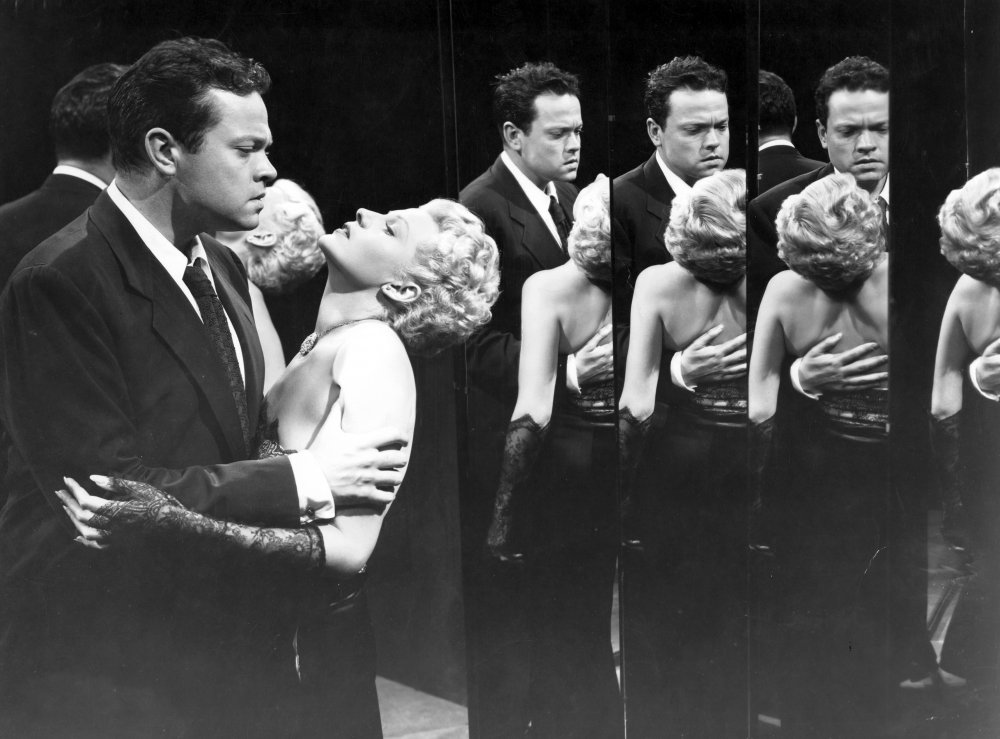
Film Form in The Lady From Shanghai (clink on picture for scene analysis)

'The Lady From Shanghai'(Welles, 1947) adopts features of film noir. Film noir has a very unique look. It emerged from Hollywood at the end of World War 2 and takes inspiration from German Expressionism. The films are black and white and have a bleak almost pessimistic look. LFS follows a circular narrative and the plot is solving a mystery.

Image result for lady from shanghai


  • Cinematography - close-ups are used so characters' emotions and facial expressions can be displayed i.e  
  • Lighting - helps build the mood and can show the characters' view of each other i.e Michael thinks Elsa is beautiful and exotic 
  • Mise-en-scene - exotic locations and elaborate backgrounds, cigarettes
  • Sound - voiceovers are used to show Michae's sense of confusion
  • Femme fatale - independence of woman 


Wink dies ;(

Scene Analysis